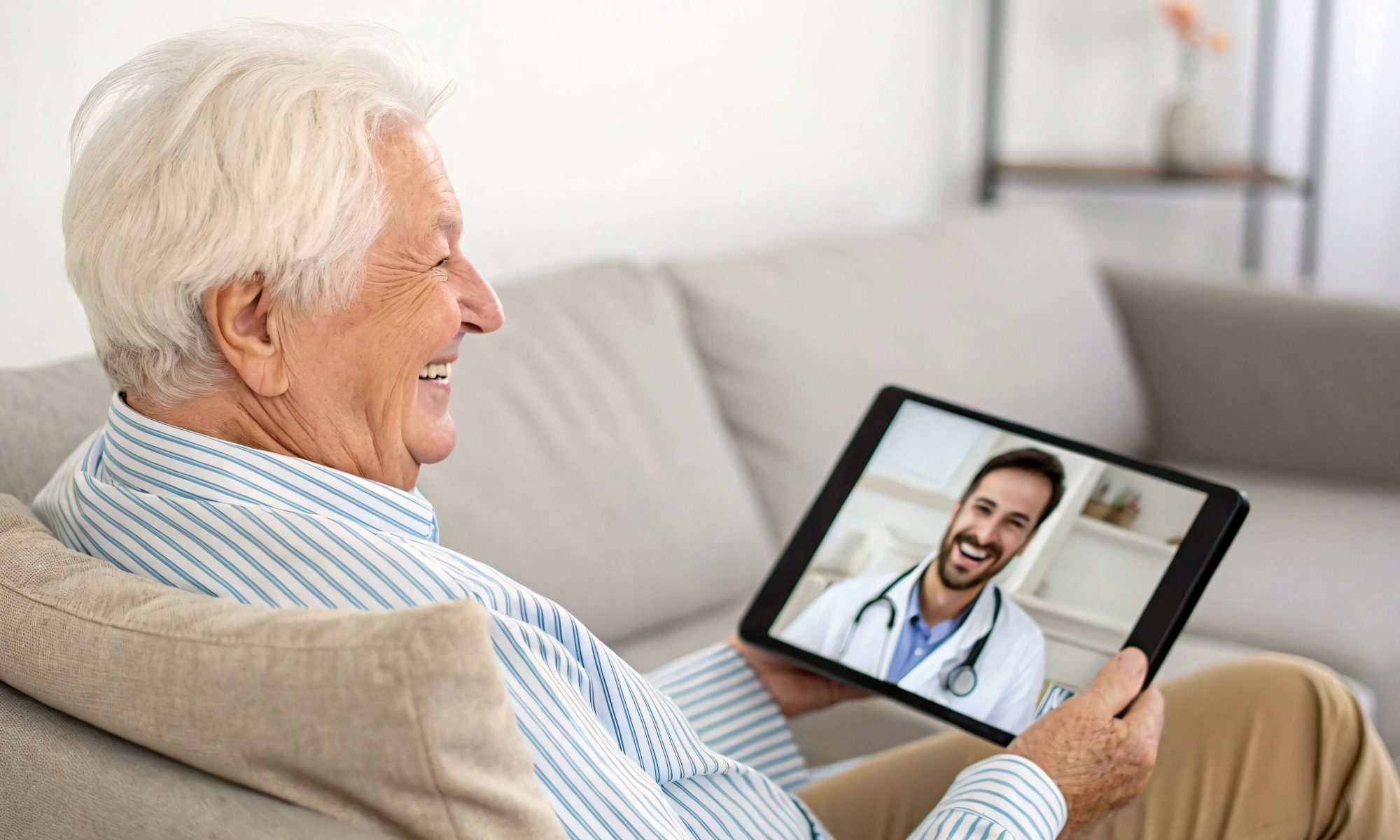
Technology that supports in-home care includes tools like remote monitoring devices, smart home systems, telehealth platforms, medication organization apps, and communication technologies, all designed to help individuals live safely and independently at home while keeping caregivers informed and connected.
What Are Remote Patient Monitoring Devices and How Do They Help?
Remote patient monitoring (RPM) devices track key health indicators in real time and send data directly to caregivers or care coordinators.
- Wearable monitors track heart rate, blood oxygen levels, and activity levels throughout the day.
- Fall detection sensors alert caregivers immediately if a fall is detected.
- Smart scales and blood pressure cuffs log readings automatically for easy review.
- Continuous glucose monitors (CGMs) provide real-time blood sugar data for individuals managing diabetes.
How Do Smart Home Technologies Support Independent Living?
Smart home devices create safer, more accessible environments for people receiving in-home care.
- Voice-activated assistants (like Amazon Echo or Google Home) allow users to control lights, thermostats, and appliances hands-free.
- Smart locks and doorbell cameras enhance home security and allow remote access monitoring.
- Motion sensors can detect unusual inactivity and alert caregivers if something seems off.
- Automated lighting reduces the risk of nighttime falls.
Living independently is important for seniors who want to maintain a high quality of life. For some, this simply means receiving help with tasks that have become more challenging to manage over time. Even when families have the best intentions, they may not have the time to provide the care their elderly loved ones need and deserve. If your loved one needs help to age in place as independently as possible, reach out to Assisting Hands Home Care, a trusted provider of respite, 24-hour, and overnight home care Annapolis seniors can depend on.
How Does Telehealth Technology Improve Access to Care at Home?
Telehealth platforms connect individuals with healthcare providers through secure video calls, eliminating the need for transportation to appointments.
- Virtual visits can be scheduled for routine check-ins, follow-ups, and specialist consultations.
- Telehealth platforms such as Teladoc and Doxy.me are designed to be simple and accessible for older adults.
- Many platforms integrate directly with RPM devices, allowing providers to review health data before and during appointments.
What Medication Organization Tools Are Available for Home Care?
Medication errors are one of the most common challenges in home care. Thankfully, several technologies help individuals stay on track.
- Automated pill dispensers (like Hero or MedMinder) sort medications and release the correct dose at the right time.
- Smartphone reminder apps send alerts when it’s time to take a dose.
- Smart blister packs track whether medication has been taken and notify caregivers if a dose is missed.
How Do Communication and Coordination Tools Keep Everyone Connected?
Effective communication among individuals, family members, and professional caregivers is essential for high-quality in-home care.
- Care coordination platforms like CareZone and CaringBridge allow all members of a care team to share updates, schedules, and notes in one place.
- Video calling apps such as FaceTime, Zoom, and WhatsApp keep family members connected regardless of distance.
- GPS tracking devices offer peace of mind for families of individuals who may be at risk of wandering or getting lost.
Wandering is a common symptom of dementia, which can be especially challenging for family caregivers. However, with professional dementia home care that offers Annapolis families peace of mind, their loved ones can still live independently at home. Professional dementia caregivers help seniors with dementia stay safe and comfortable at home by preventing wandering, providing cognitive stimulation, and assisting with household chores.
One of the most challenging tasks of helping an elderly relative age in place safely and comfortably is researching agencies that provide home care. Families can turn to Assisting Hands Home Care for reliable, high-quality Annapolis homecare services for aging adults. We offer 24-hour care for seniors who require extensive assistance, and we also offer respite care for family caregivers who need a break from their caregiving duties. For trustworthy in-home care services, contact us today.
Frequently Asked Questions
What types of technology are most commonly used in in-home care?
+
The most commonly used technologies include remote monitoring devices, smart home systems, telehealth platforms, medication organization tools, and communication apps. Each serves a different purpose, but they work together to support safe independent living at home.
Is in-home care technology easy for older adults to use?
+
Many in-home care technologies are specifically designed with older adults in mind, featuring simple interfaces, large text, and voice-activated controls. Devices like Amazon Echo and automated pill dispensers require minimal technical knowledge to operate.
How much does in-home care technology typically cost?
+
Costs vary widely depending on the type of technology. Basic medication reminder apps may be free, while advanced remote monitoring systems can cost hundreds of dollars per month. Some insurance plans and government programs may offset certain costs.
Can in-home care technology work without a strong internet connection?
+
Some devices, such as GPS trackers and cellular-enabled monitors, work without Wi-Fi. However, most smart home systems and telehealth platforms do require a reliable internet connection to function properly.
How do I know which in-home care technology is right for my situation?
+
The right technology depends on your loved one’s specific needs, living environment, and level of independence. Consulting with a professional caregiver or care coordinator can help you identify the most appropriate tools.