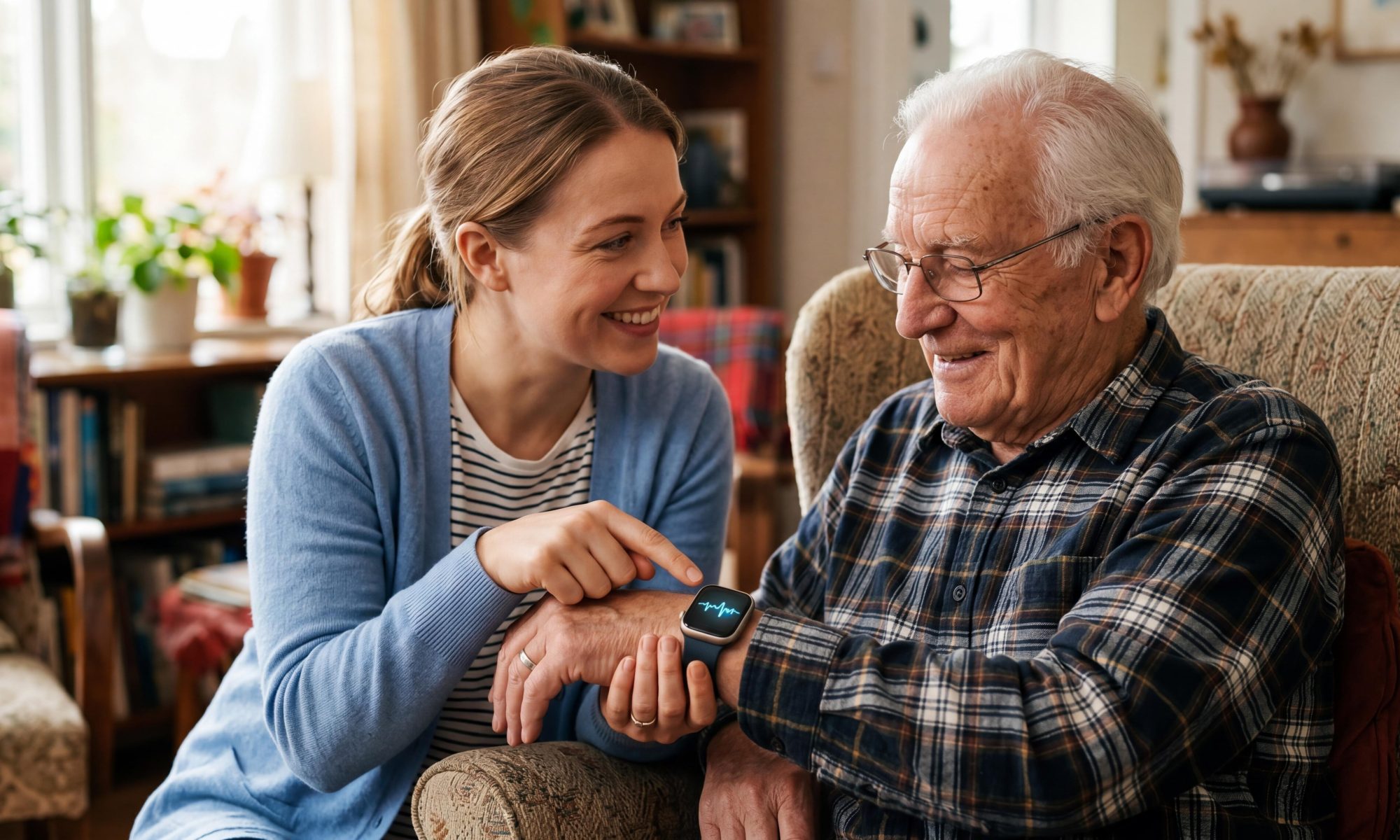
Wearable health monitors are revolutionizing preventative senior in-home care by continuously tracking vital signs and physical activity to catch potential issues before they escalate. These devices empower older adults to maintain their independence while providing profound peace of mind to their families. By shifting the focus to proactive wellness management, modern technology is reshaping how seniors age comfortably in their own environments.
What Are Wearable Health Monitors?
Wearable health monitors are smart devices, such as wristbands, rings, or smartwatches, designed to continuously observe a user’s physical metrics. They gather data on daily movements, heart rates, and sleep patterns to establish a reliable baseline of an individual’s everyday wellbeing. By wearing these tools constantly, seniors generate a continuous stream of health data that helps caregivers identify subtle changes in their normal routines.
One of the most challenging tasks of helping an elderly relative age in place safely and comfortably is researching agencies that provide home care. Families can turn to Assisting Hands Home Care for reliable, high-quality Annapolis elder care for aging adults. We offer 24-hour care for seniors who require extensive assistance, and we also offer respite care for family caregivers who need a break from their caregiving duties.
How Do These Devices Increase Senior Safety?
These specialized gadgets significantly boost daily safety by offering real-time insights into a senior’s physical state. Families and caregivers can use this information to respond quickly to unusual data points.
- They detect sudden changes in heart rate or significant drops in overall daily activity.
- Built-in motion sensors can accurately identify potential falls or sudden impacts.
- GPS tracking features can locate seniors who may be prone to wandering.
Wearable devices are especially helpful for families caring for older adults living with dementia, who often tend to wander. Caring for seniors with dementia can be challenging for family caregivers. Luckily, there is dementia care Annapolis families can rely on. Professional dementia caregivers help seniors with dementia stay safe and comfortable at home by preventing wandering, providing cognitive stimulation, and assisting with household chores.
Why Is Preventative Care Crucial for Aging in Place?
Preventative monitoring allows older adults to stay ahead of physical issues, making it highly feasible to remain living at home safely. By keeping a close eye on everyday metrics, family members can proactively adjust routines, suggest better hydration, or encourage more physical activity. Catching minor shifts in behavior early prevents small lifestyle problems from snowballing into critical situations.
Which Features Should You Look for in a Senior Wearable?
Selecting the right device depends entirely on the lifestyle and specific needs of the individual wearing it. Choosing a monitor with the right features ensures the user will actually keep it on throughout the day.
- Extended battery life to minimize the frustration of frequent charging
- Simple, user-friendly interfaces featuring large fonts and uncomplicated buttons
- Water resistance to ensure continuous monitoring during bathing or dishwashing
- Automatic data syncing so users don’t have to manually upload their statistics
Wearables can make it much easier for seniors to age in place with a high degree of independence. Living independently is important for seniors who want to maintain a high quality of life. For some, this simply means receiving help with tasks that have become more challenging to manage over time. Even when families have the best intentions, they may not have the time to provide the care their elderly loved ones need and deserve. If your loved one needs help for a few hours a day or a few days a week, reach out to Assisting Hands Home Care, a trusted provider of respite, 24-hour, and overnight home care for seniors in Annapolis and nearby communities. For reliable in-home care services, contact us today.
Frequently Asked Questions
Are wearable health monitors difficult for older adults to use?
+
Most modern wearables are designed with absolute simplicity in mind, featuring intuitive interfaces and automated tracking that require almost no daily setup.
Can these monitors track sleep quality?
+
Yes, many of these devices monitor sleep duration, wakefulness, and restlessness, providing valuable insights into a senior’s nightly recovery patterns.
Do wearable monitors require smartphones to work?
+
While some devices sync directly to nearby smartphone apps, many senior-focused models use built-in cellular or Wi-Fi connections to transmit data independently.
Are these devices comfortable to wear all day?
+
Manufacturers prioritize lightweight, breathable, and hypoallergenic materials, ensuring the monitors remain comfortable during daytime activities and throughout the night.